What happens when an experiential designer is unable to create an adequate design solution for an audience, (either through error or through absence) and the audience is left to create their own solution? A niche field of art and design known as Anarchitecture answers this question. It is the study of design in which the standard hierarchy of client-designer-customer is subverted, such as when “citizen designers” must innovate their own solutions.





Experiential Design
ANARCHITECTURE
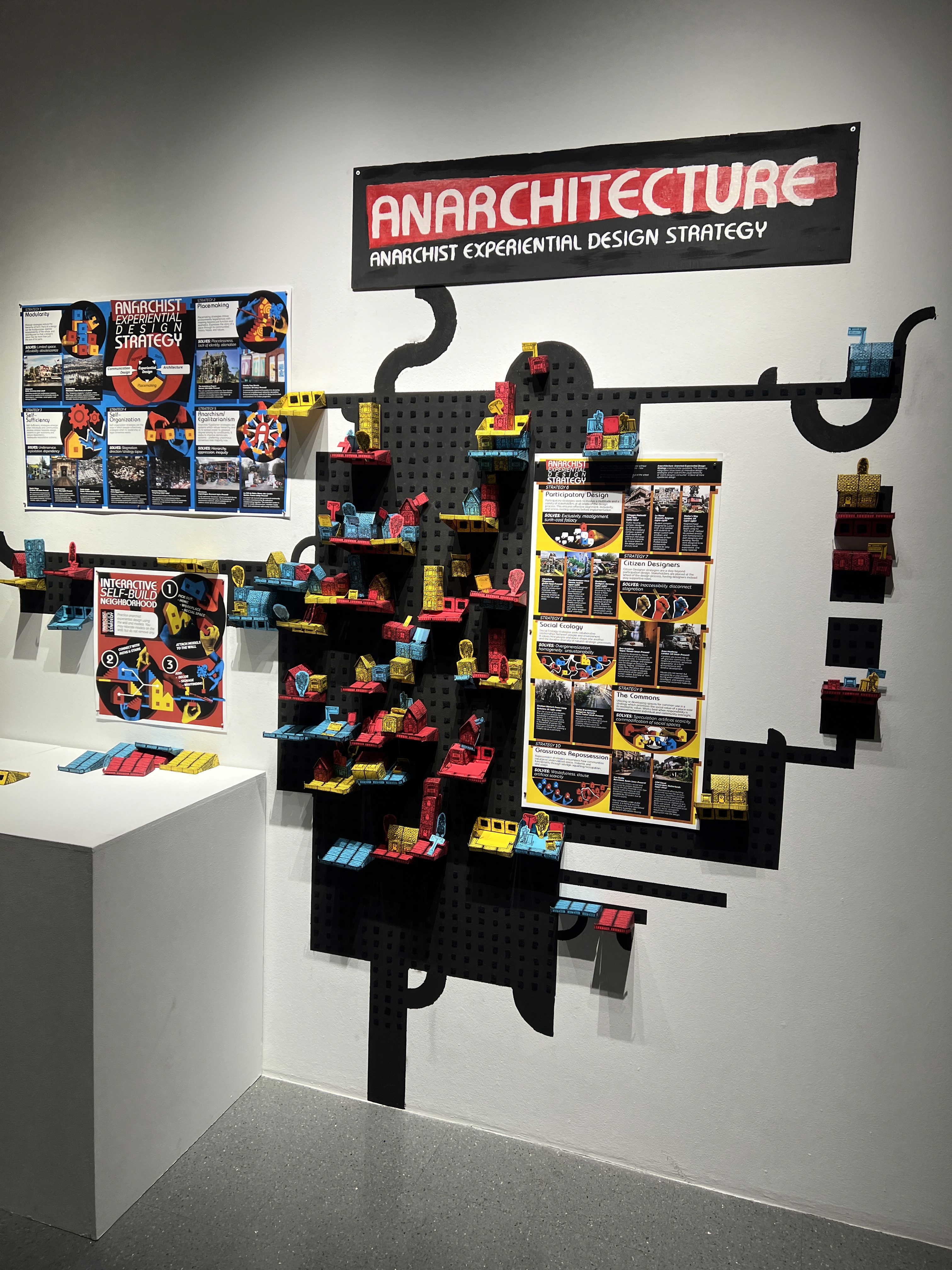
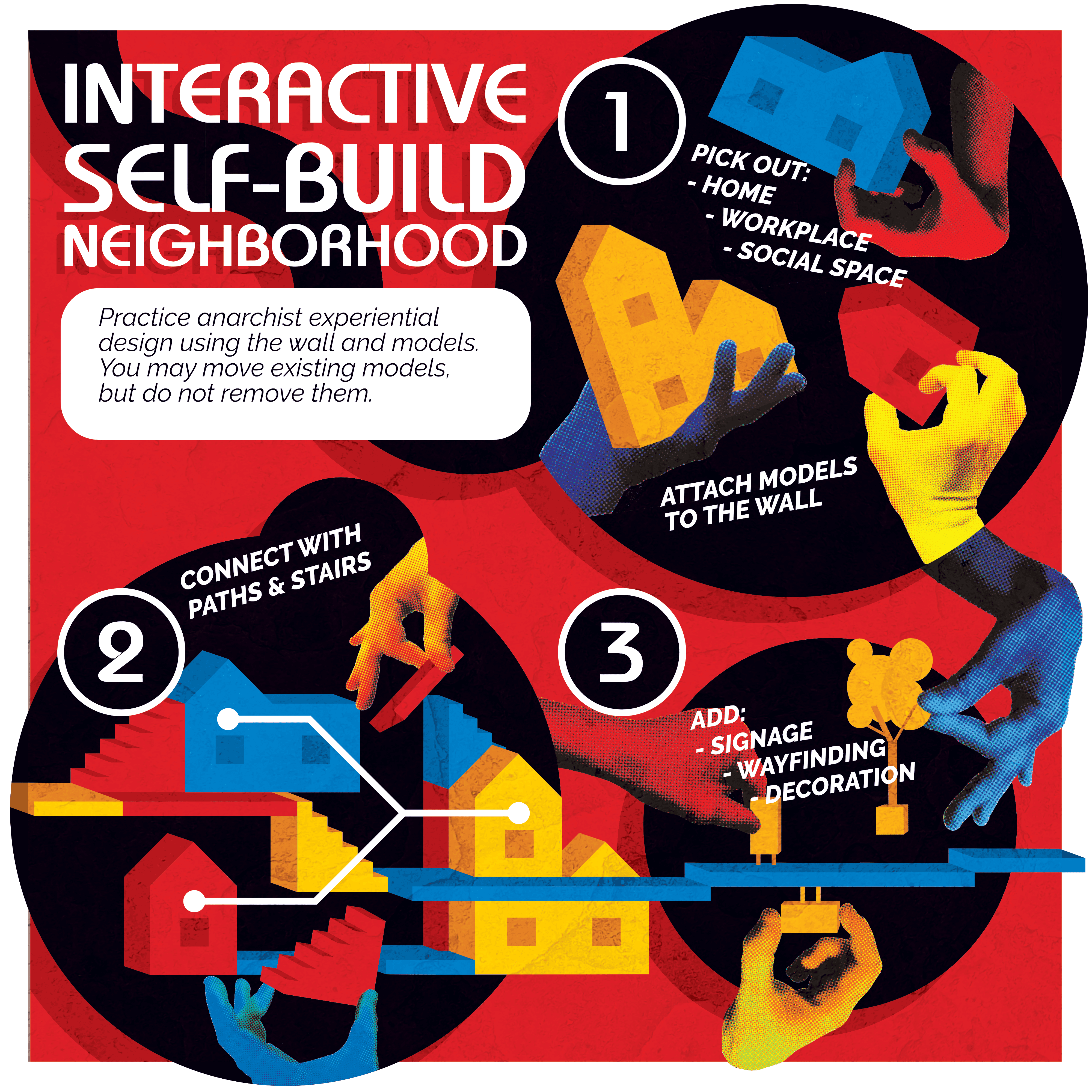
The two infographics present the bulk of my research. They describe the ten key strategies of anarchitecture listed in part III, along with photo examples and visual aids in the form of an icon system. They utilize strategies and aesthetics of modernist styles but break the rules by testing the boundaries of the grid system, using ornamentation, and embracing a more playful and relaxed attitude. A highlight of the design is the icon system, which uses a system of modular assets to convey different concepts in a visually striking way. The primary assets of this system are modernist architectural forms, stylized to resemble children’s building blocks, and photography of hands and tools, stylized to resemble magazine cutouts.
The interactive portion of the exhibit presents a playful “self-build” neighborhood of modular paper-craft models for visitors to experiment with. Visitors may put my presented strategies into practice, or create their own design strategies. This exhibit solution blends information with hands-on practice, which is not only a good way to learn but also in the spirit of the kind of hierarchy-free design experimentation my research supports.